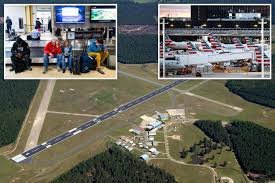
A malfunctioning router at a remote Arkansas radio site disrupted pilot-controller communications, grounding more than 3,500 flights and stranding thousands of passengers across the United States.
A single malfunctioning router at a Federal Aviation Administration (FAA) radio site in El Dorado, Arkansas, has emerged as the likely cause of widespread air travel disruption across the United States on Friday, November 13, 2026. According to a report by The Wall Street Journal, the newly installed router generated excessive network traffic, interfering with communications between pilots and air traffic controllers and triggering a nationwide ground stop.
The incident exposed the vulnerabilities of the country’s air traffic control infrastructure, demonstrating how a technical failure at a relatively remote location can disrupt operations at major airports nationwide.
How One Router Triggered Nationwide Disruption
The problem originated at an FAA radio facility near South Arkansas Regional Airport in El Dorado. According to officials, the newly installed router began sending an unusually high volume of connection requests across the network, overwhelming other devices and interfering with critical aviation systems.
Rebecca Guy, the FAA’s technology chief, said officials identified two locations generating network activity at an exceptionally high rate, with approximately 1,000 connections occurring every four to five seconds.
The abnormal traffic disrupted communications between aircraft and air traffic controllers, while also affecting radar feeds used to monitor and manage air traffic. With essential systems compromised, aviation authorities were forced to halt flights to protect passenger safety.
Thousands of Flights Affected
The resulting shutdown lasted approximately five hours and grounded more than 3,500 flights. Tens of thousands of travelers faced cancellations, delays and uncertainty as airports across the country struggled to manage the disruption.
Passengers were left waiting at terminals, collecting luggage from canceled flights and attempting to rebook their journeys. Major airports, including Chicago O’Hare International Airport and Ronald Reagan Washington National Airport, experienced the consequences of the nationwide ground stop.
Although flight operations gradually resumed after the disruption was addressed, the incident highlighted how a localized technology failure can produce widespread consequences across a highly interconnected transportation system.
Investigation Focuses on Router Failure and Installation Work
Transportation Secretary Sean Duffy confirmed that investigators were examining the malfunctioning equipment and the circumstances surrounding its installation. The routers involved are associated with L3Harris, the contractor responsible for operating and maintaining the FAA’s network.
Speaking on CBS’s Face the Nation, Duffy said the FAA was working at the site alongside the contractor, while the FBI was offering support. Investigators are examining whether the incident resulted from defective hardware, installation errors or another technical issue.
Duffy said the government would disclose its findings once the root cause had been established.
At this stage, officials have not publicly confirmed whether the router itself was defective or whether the failure resulted from work performed during installation. The investigation is expected to help determine what went wrong and whether additional safeguards are needed to prevent similar incidents.
Modernization Efforts Under Scrutiny
The disruption occurred during routine maintenance associated with replacing aging copper telecommunications infrastructure with modern fiber-optic cables. The work forms part of a broader effort to modernize the FAA’s outdated technology systems.
Fiber-optic networks can provide greater bandwidth and improved reliability, but the transition also requires careful installation, testing and monitoring to ensure that new equipment does not compromise existing operations.
The Arkansas incident raises questions about how newly installed network components are tested before being integrated into critical aviation infrastructure. It also underscores the importance of backup systems, network isolation and automated safeguards capable of identifying abnormal traffic before it spreads.
A Warning for Critical Infrastructure
The incident serves as a reminder that modern transportation systems depend on complex networks of interconnected technologies. A failure involving a single component can affect communications, monitoring and operational decision-making far beyond the location where the problem originates.
For the FAA, the immediate priority is to establish the precise cause of the failure and determine whether similar vulnerabilities exist elsewhere in its network. The findings could influence future maintenance procedures, equipment testing and the agency’s wider modernization strategy.
While investigators continue examining the role of the router and its installation, the nationwide disruption has already demonstrated the importance of reliability and resilience in aviation technology.
Conclusion: A malfunctioning router at a rural Arkansas facility appears to have played a central role in the nationwide flight chaos of November 13. With more than 3,500 flights grounded and thousands of travelers affected, the incident highlights the far-reaching consequences of technical failures in critical infrastructure. The investigation into the equipment and installation work will be crucial in identifying the root cause and preventing a similar disruption in the future.
Post Views: 2