Subtitle: Ukrainian forces reportedly deployed more than 1,000 drones in one of the year’s largest attacks on Russian oil infrastructure, setting facilities ablaze and escalating tensions over a proposed energy cease-fire.
Ukrainian Drone Barrage Hits Key Russian Oil Facilities
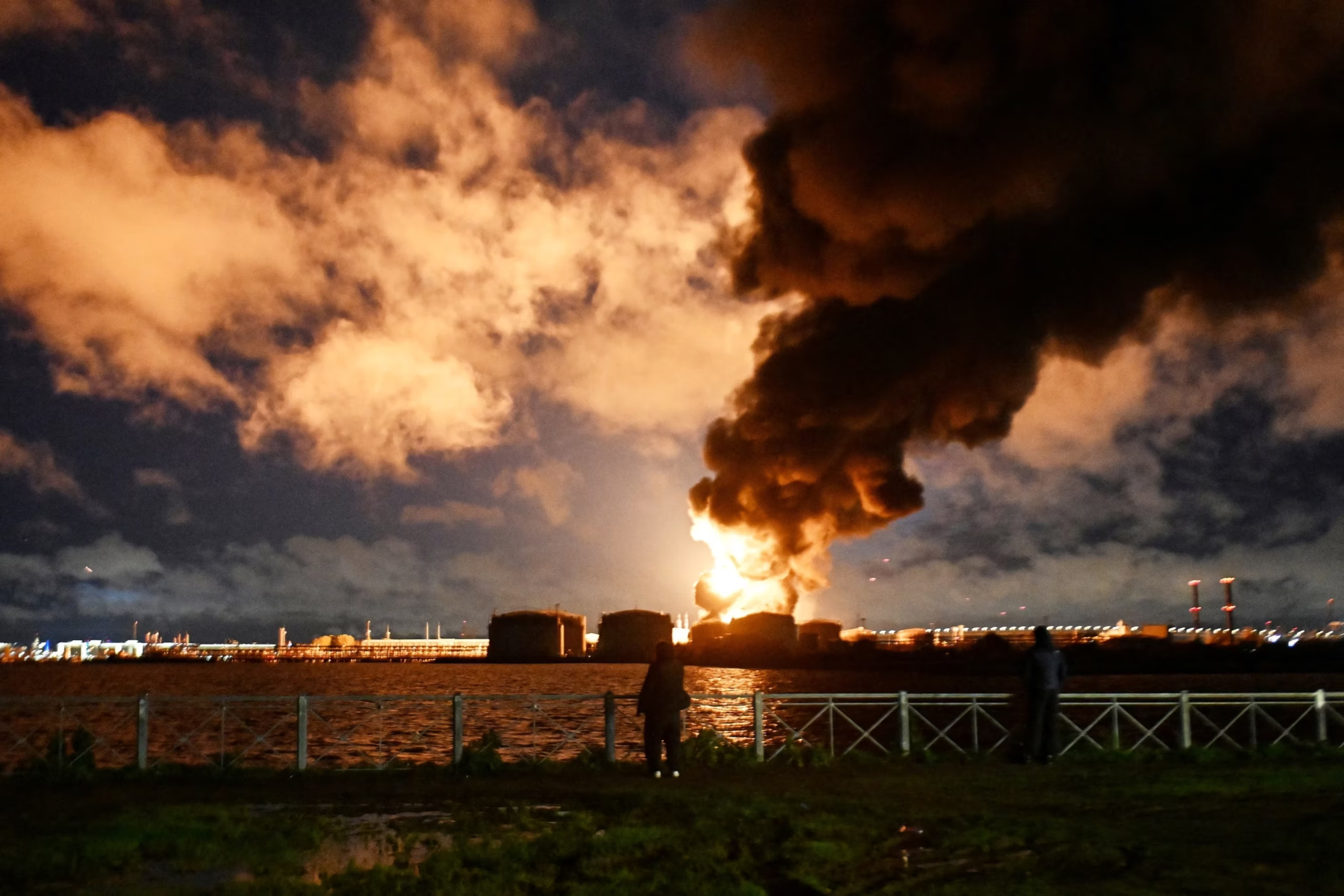
Ukraine has launched a large-scale drone assault targeting Russian oil infrastructure, including facilities in St. Petersburg, Russian President Vladimir Putin’s hometown. The reported strikes sparked fires at the Petersburg Oil Terminal and the Ruchi oil depot, marking a significant escalation in Ukraine’s campaign against Russia’s energy sector.
According to regional Governor Alexander Beglov, at least one person was killed and five others were injured in attacks on the oil facilities. The strikes came amid continued hostilities between the two countries and renewed debate over efforts to halt attacks on energy infrastructure.
Russia Reports More Than 1,000 Ukrainian Drones
Russia’s Ministry of Defense claimed that its forces intercepted or destroyed 1,015 Ukrainian drones across 15 Russian regions, including annexed Crimea and areas over the Black Sea. Ukrainian forces reportedly launched more than 1,000 drones as part of the broader operation.
The scale of the reported barrage highlights Ukraine’s growing emphasis on long-range drone operations targeting facilities that support Russia’s energy industry and wartime economy.
Kremlin spokesperson Dmitry Peskov said the attacks demonstrated Ukraine’s continued resistance to Russia’s invasion. However, he argued that the strikes would not change the course of the conflict.
Zelensky Vows to Continue Strikes on Russian Energy Infrastructure
Ukrainian President Volodymyr Zelensky defended his country’s military campaign, saying Ukrainian forces had made progress on the battlefield in recent months.
“The trend this year continues – since the start of fall, our warriors have liberated more territory than the Russians have managed to capture,” Zelensky said on Sunday.
He also praised Ukrainian troops for maintaining their positions and carrying out military operations.
Zelensky reiterated that Ukraine would continue targeting Russian oil facilities, arguing that Moscow had not reciprocated calls to limit attacks on energy infrastructure.
Dispute Over Proposed Energy Cease-Fire
The latest strikes follow Ukraine’s rejection of a proposed energy cease-fire associated with US President Donald Trump’s efforts to reduce attacks on energy facilities. Zelensky has argued that Russia continued striking Ukrainian energy infrastructure despite calls for restraint.
According to the Ukrainian president, Russia had carried out more than 76 attacks on Ukrainian energy, oil and gas facilities since the cease-fire was announced.
Zelensky urged Washington to recognize what he described as Moscow’s failure to take reciprocal steps, arguing that opportunities for sanctions relief and economic agreements could encourage Russia to continue its military campaign.
Energy Infrastructure Remains Central to the War
Russia’s energy facilities remain strategically important because oil revenues help support the country’s economy and war effort. Ukrainian attacks on refineries, terminals and depots aim to disrupt fuel production, storage and distribution, while Russian strikes have repeatedly threatened Ukraine’s power and energy systems.
Military analysts have warned that intensified Russian attacks on Ukrainian energy infrastructure ahead of winter could increase pressure on Kyiv by threatening electricity and heating supplies.
The latest drone assault underscores how energy infrastructure continues to serve as both a military target and a source of diplomatic tension. With neither side showing clear willingness to stop these operations unilaterally, attacks on energy facilities are likely to remain a significant feature of the conflict.
Post Views: 17