Apple’s first foldable iPhone has earned praise for its sophisticated hinge and crease-reducing display, but early reports of cracked screens, limited multitasking and camera compromises are raising questions about whether the $1,999 device is worth the premium price.
Apple’s long-awaited entry into the foldable smartphone market is attracting attention for both its innovative design and reports of early hardware problems.
The iPhone Duo went on sale on October 23, 2026, following generally positive reviews from technology publications. Engadget praised the device as “worth the wait,” while WIRED described it as an “astonishingly good first foldable.” The Verge also highlighted its appeal while pointing to compromises in the overall experience. <Cite refs={[“turn390589search10″,”turn390589news33”]}/>
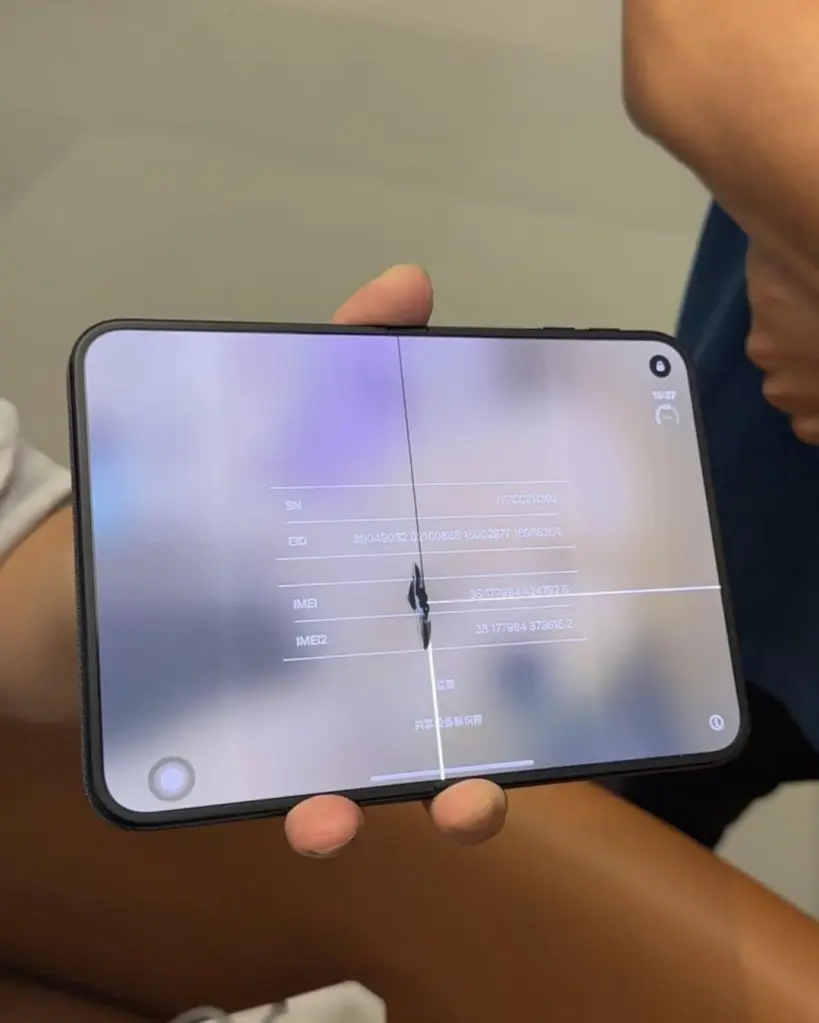
However, several early owners have reported cracks developing along the inner display’s hinge area, in some cases within hours of purchase. The reports have raised concerns about durability, although the number of affected devices and the underlying cause remain unknown. <Cite refs={[“turn390589search0″,”turn390589search7”]}/>
Early Buyers Report Cracks Along the Folding Display
Some iPhone Duo owners have shared photographs and videos on Reddit showing damaged inner screens, with several reports describing similar problems around the folding crease.
One Australian buyer said the display cracked after approximately six hours of ownership and fewer than 20 openings. According to the account, the user felt something unusual beneath the screen near the hinge before hearing a cracking sound as the phone was unfolded.
The buyer reported no visible external damage and said an Apple Store replaced the device.
Other users have posted images of cracks and bright lines across their displays, prompting speculation that the hinge mechanism or another internal component could be involved. However, these reports do not establish a common cause or confirm a widespread manufacturing defect. <Cite refs={[“turn390589search0″,”turn390589search4”]}/>
As of the latest reports, Apple had not publicly explained the issue or confirmed how many devices were affected. The early complaints nevertheless represent a concern for buyers considering an expensive first-generation foldable phone.
Reviewers Praise the Hinge and Large Inner Display
Despite the durability concerns, reviewers have praised several aspects of the iPhone Duo’s design.
The device opens to reveal a 7.6-inch matte display intended to reduce glare. Its hinge allows the phone to fold smoothly and remain positioned at different angles, while the screen’s finish helps make the crease less distracting.
The display is not entirely crease-free, however. Some reviewers noted that the fold remains visible from certain angles and can still be felt when running a finger across the screen.
The anti-reflective finish also involves a trade-off, with some reviewers observing less vibrant colours and less pronounced blacks than on Apple’s conventional premium iPhones.
Weight and Size Remain Major Drawbacks
At 254 grams and approximately 11.3 millimetres thick when folded, the iPhone Duo is relatively bulky compared with conventional smartphones.
Its 5.4-inch outer display has also attracted mixed reactions. Some reviewers appreciate the compact screen for quick interactions, while others find it restrictive when browsing websites or using apps.
The Wall Street Journal offered a particularly critical assessment, describing the device as “Too Much iPhone, Too Little iPad.”
Although the larger display offers more room for reading and working, reviewers said the software does not fully replicate the productivity features available on an iPad.
App Support and Multitasking Need Improvement
Software compatibility is another challenge for Apple’s first foldable device.
Apple’s own applications generally transition between the outer and inner screens smoothly, but some third-party apps have yet to make effective use of the expanded display. In certain cases, apps appear in narrow, phone-sized layouts surrounded by unused space.
WIRED reviewer Julian Chokkattu highlighted the problem, noting that some applications displayed thick black bars on either side of the tablet-like screen.
Multitasking also comes with restrictions. Users can run two apps side by side, but the software enforces a fixed 50-50 split rather than allowing users to resize the windows freely. The device also lacks support for adding a floating third app in this mode.
These limitations could improve as developers update their applications. Reviewers noted that some apps received compatibility improvements during the review period, suggesting the software experience may become more polished over time. <Cite refs={[“turn390589search10”]}/>
Camera Performance Falls Short of Apple’s Best
The iPhone Duo’s camera system has received a more mixed response than its folding display.
Reviewers generally viewed the main and ultrawide cameras positively, but some found their performance inferior to the iPhone 18 Pro, particularly in low-light conditions.
The device’s 4-megapixel under-display camera also attracted criticism, with reports describing disappointing image quality and washed-out results.
These compromises may matter to buyers who expect Apple’s most expensive iPhone to deliver the company’s best camera performance. Unlike app compatibility issues, camera hardware limitations may be more difficult to address through software updates alone.
Is the iPhone Duo Worth $1,999?
The iPhone Duo represents a significant step into a new smartphone category for Apple. Its large folding display, refined hinge and reduced screen glare have impressed reviewers, but its weight, camera compromises and limited multitasking make it a less straightforward recommendation.
The early reports of cracked displays add another uncertainty for prospective buyers. While some affected customers say they received replacement devices, the available reports do not establish how widespread the problem is or whether it reflects a broader design issue.
For consumers interested in foldable technology, the iPhone Duo offers an ambitious new option. But those prioritising long-term durability, camera performance and established software support may prefer to wait for further information before spending nearly $2,000.
Post Views: 7